

Assistant Curator | Aug 2023 – Present
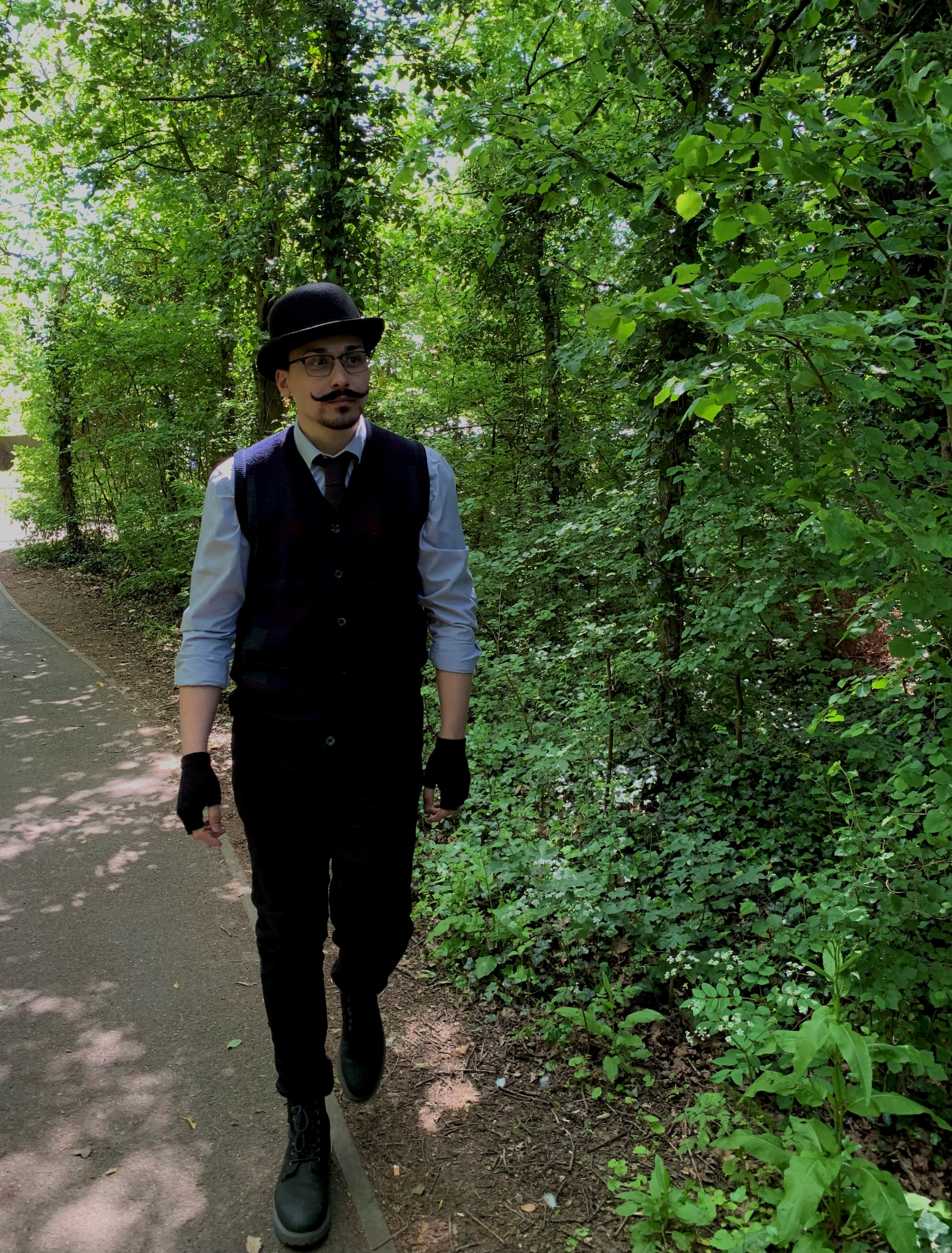
I have recently been appointed to the museum in a full time capacity. Responsibilities have so far included: rationalising the store rooms, repackaging and cataloguing specimens, updating the collections management system, Integrated Pest Management and environmental monitoring, events delivery, production of content and managing the institution’s social media presence across several platforms, and volunteer and student supervision.
Scholarship Intern | Aug 2021 – Sep 2021
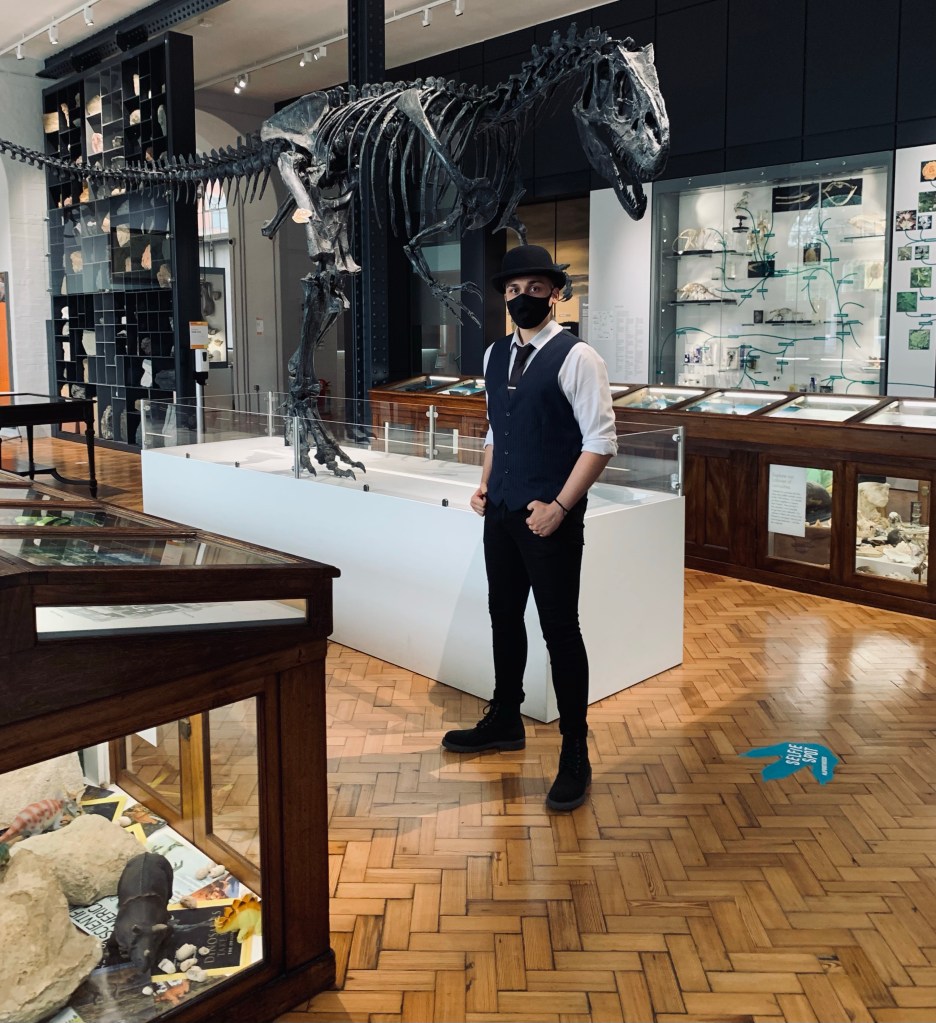
After successfully procuring a highly competitive scholarship, I was able to work intimately with the Lapworth Museum of Geology for four weeks. It was an honour to be selected as the placement allowed me to gain vital behind the scenes and front of house experience with a geological and palaeontological collection. During the programme, I became part of their dynamic Museum Team, who supervised and provided guidance where appropriate.
The scholarship has taught me so much more about museum work. It surpassed my every expectation and has further fueled my desire to continue in this sector. A massive thank you to the entire team for their kindness and support while working at the museum.
Object Accessioning
Our main task was to identify, logically order, and catalogue >1000 objects, a vast majority of which were Carboniferous plants. We were acquainted with professional manual handling techniques when manoeuvring heavy boxes, and then transported these from the museum stores to a private lab. Here we arranged any labelled specimens into basic categories (clubmosses; horsetails; ferns; seeded ferns; miscellaneous, which included seeds, spores, wood, arthropods, and other Carboniferous material; and Non-Carboniferous).
Once completed, we went through the unlabelled objects and used morphological criteria to assign them to our categories, with the help of literature. Additional categories (unidentified ferns/seeded ferns and unidentifiable plant matter) were created for material which could not be readily identified.
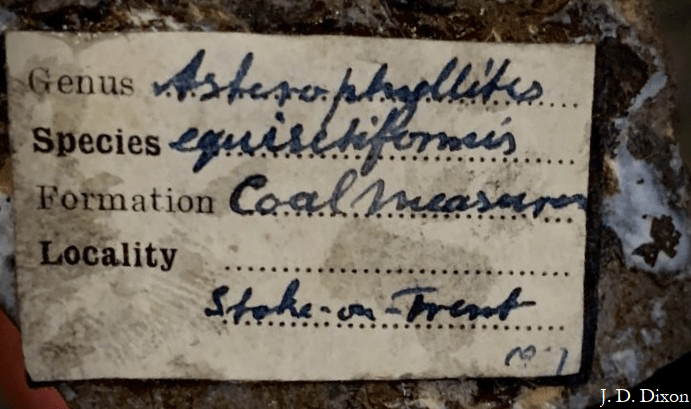
Following this, we arranged the objects within each category by the localities from which they were collected, then by their genera (if this information was available). If only one set of information was available (e.g. genera but not locality) then they were sorted by this. If neither piece of information was available, objects were categorised as such. We packaged individual objects using museum-grade trays or tissue padding to prevent unwanted movement and damage. We then gave each completed box a unique numeric code (72 boxes in total) and detailed each box number with its contents. Finally, we uploaded all information to the digital database so the object information was made more accessible. We attached small, individual collection numbers to each specimen (fragmentary specimens were given alphanumeric values) and entered all known information into the database. In many instances we needed to decipher older labels and handwriting to uncover the secrets of each item, some of which were collected over 100 years ago.
Finally we weighed each of the 72 boxes and gave them coloured stickers to convey how heavy they were. On our final day we did more of this with preorganised boxes in the museum store.
Social Media
Throughout the month we chose objects to share via social media in the upcoming weeks. This involved delving into the museum stores to examine objects and pick those which we thought would be effective for engagement. They needed to be aesthetically attractive and have associated information, so we could tell a visual and educational story. We developed our photography skills using both mobile phones and professional camera equipment to produce a range of stunning images that would captivate online readers and encourage them to visit the museum.
My first post can be seen here:
Instagram
Twitter
Facebook
My second post can be seen here:
Instagram
Twitter
Facebook
Outreach Crafts
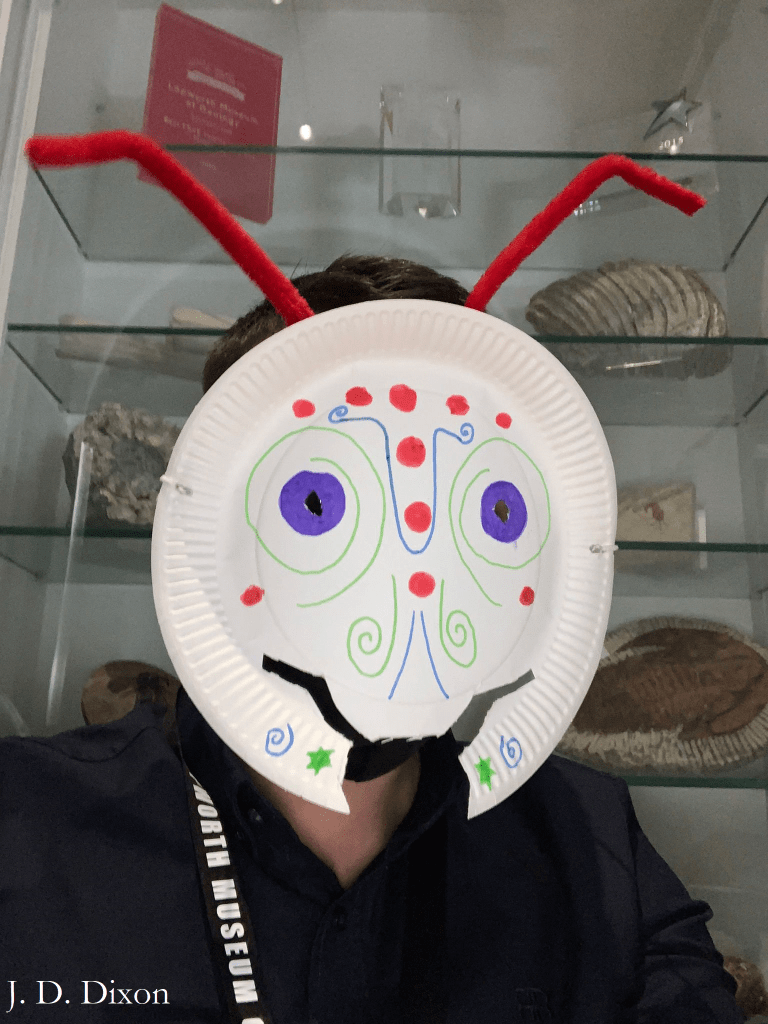
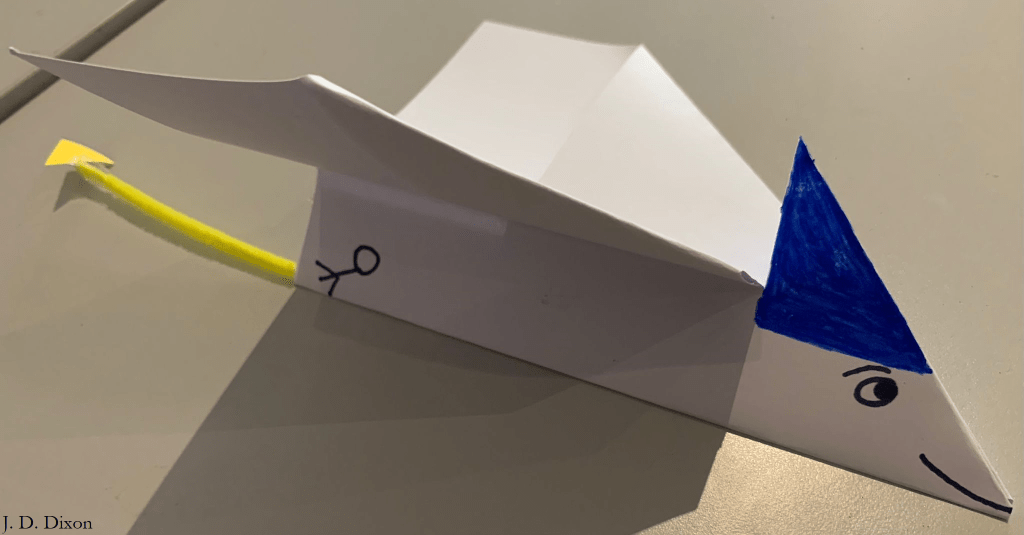
We developed a range of exciting craft ideas to improve family engagement with the museum. The crafts I designed included an insect mask and a paper pterosaur glider, agreeing with the natural science theme of the Lapworth galleries. Each was accompanied by clear yet concise instructions and images so that the process was easy to follow for all ages.
Lapworth Family Quiz
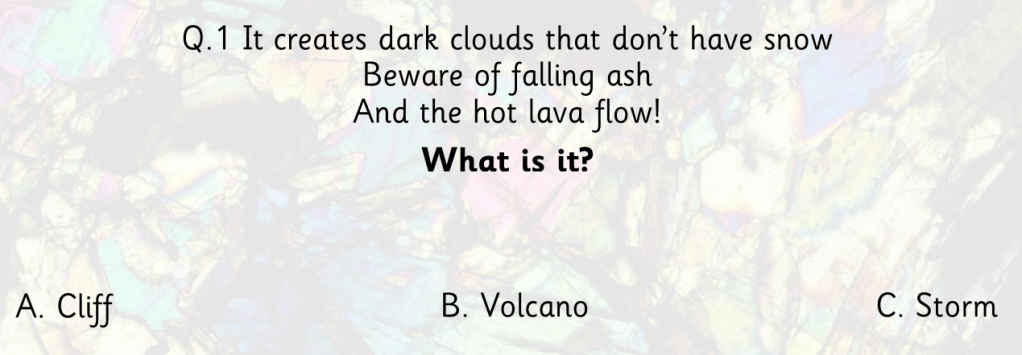
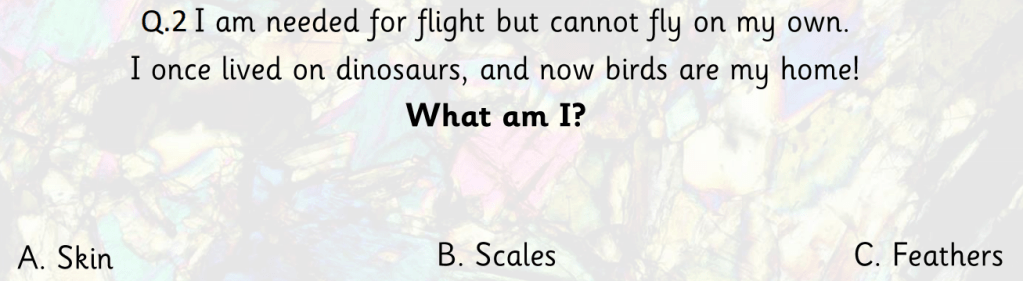
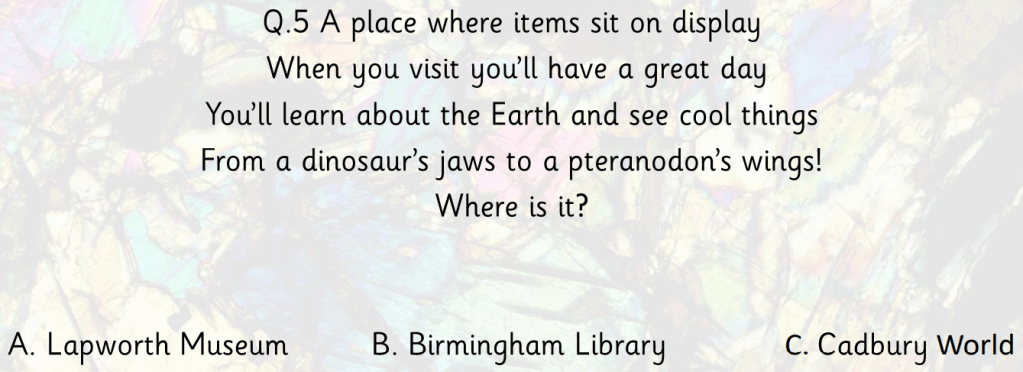
I helped design and present a round of questions for the Lapworth Family Quiz, hosted over Zoom. The quiz had wonderful engagement from everyone that attended and it was great to see that people enjoyed what we delivered. The round I organised was Georiddles, five geologically themed brainteasers with multiple choice answers (see below).


Insect Safari
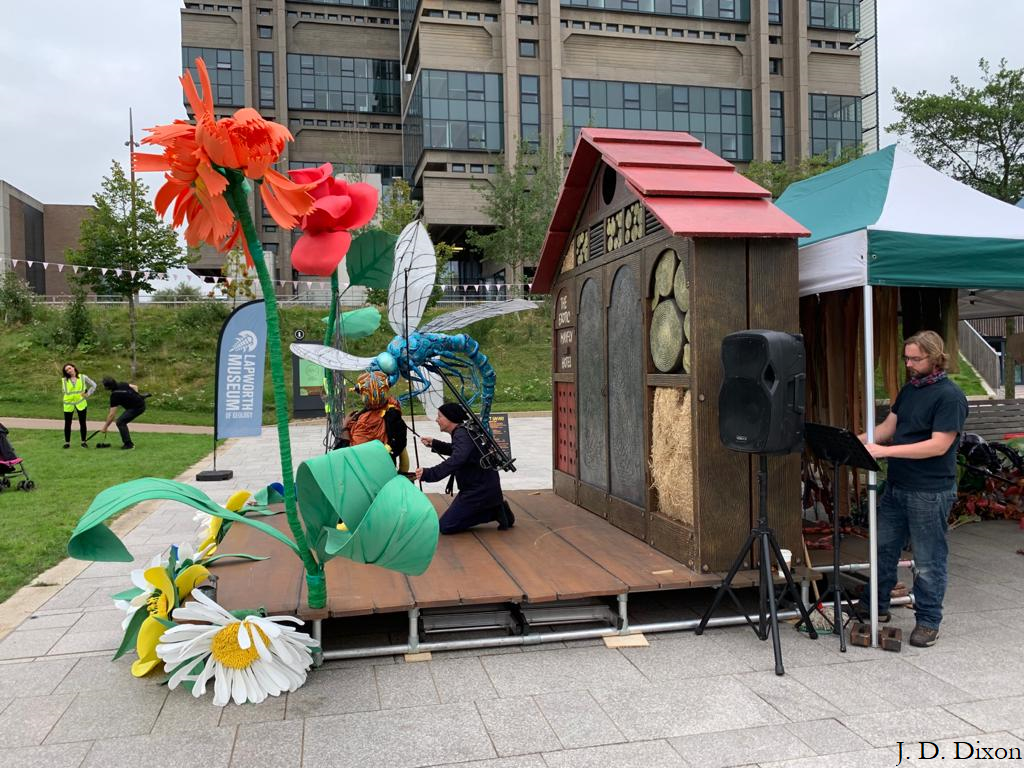
The Insect Safari was an outdoor public event hosted in partnership with The Fetch Theatre Company. It was a stage show that spun a tale of a showperson spider and an enthusiastic fly as they explored global insects and unlocked a fossiliferous mystery, using impressive puppets and large models to illustrate the story. We helped monitor the event and then aided the troupe in dismantling their stage and packing away their equipment. This gave us insight into the mechanisms of a production beyond the performance itself.
Photography and Digitisation

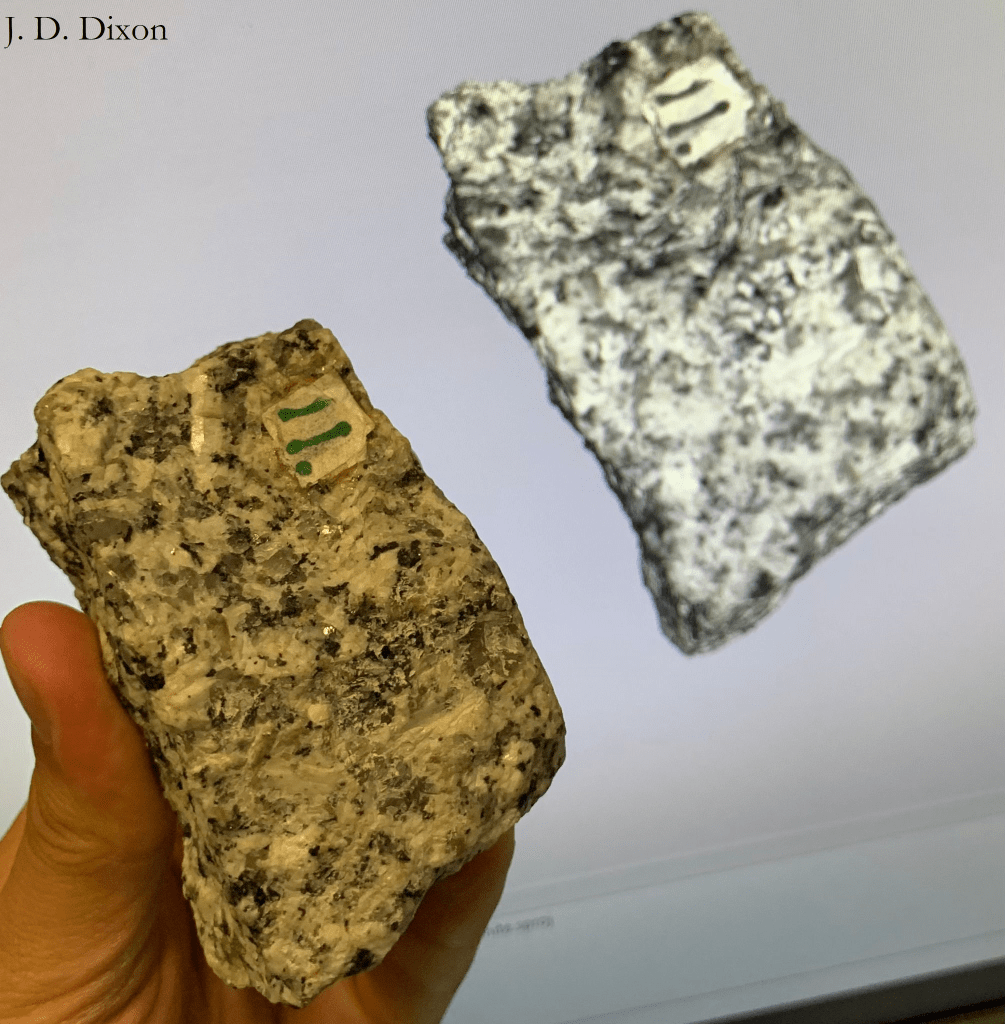
The museum has a collection of objects in a loan box of their own, called the Rock Box, which is usually sent to schools for education. However, the weight of this box makes shipping difficult or costly, so the team wanted to digitise the contents to allow institutes further afield to use the material. Here, we used a structured light scanner and rotating stage to capture multiple images of each item from various angles, which we then digitally aligned and textured in Artec Studio to form an exact, interactive, copy of each object.
Likewise, we digitised a number of original photographs from the late 19th century. These showed Charles Lapworth and his field expeditions. It was remarkable to see history in our hands, and it enhanced my ability to handle sensitive, aged paper.
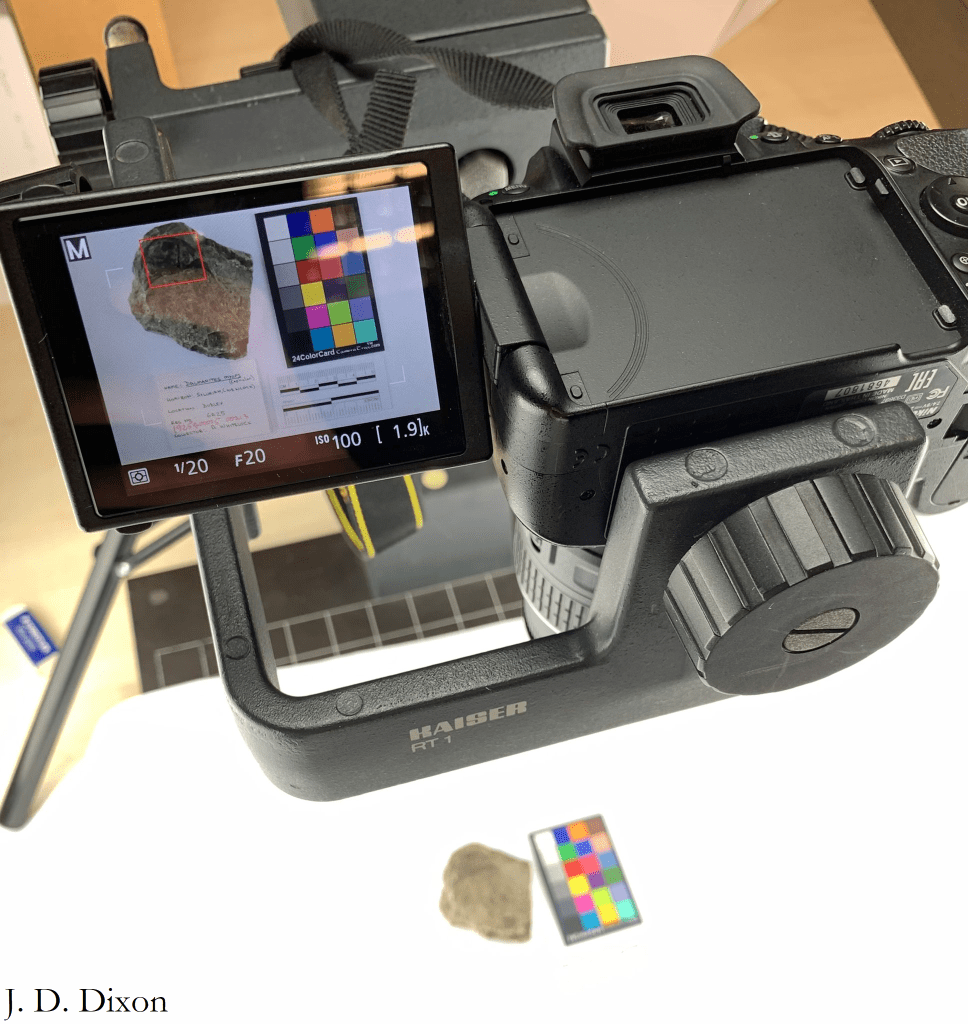
We also photographed a collection of ~124 marine invertebrates that the museum had attained on loan from the BMT. For this we set up a lighting and camera rig using a Nikon D5200 DSLR camera with an 18-55mm kit lens and image sensor of 24.1 megapixels that could be adjusted according to the size of the objects. We then positioned each object with its label, a colour chart, and a scale bar, and captured the image.
Life in the Ice Age Webinar
During the museum’s Life in the Ice Age: A Mammoth Adventure webinar, in partnership with Creswell Crags, we monitored the live Zoom chat traffic and provided succinct answers to the public while the speakers presented. This required quick thinking and research skills to give the best possible answer in the shortest time.
The session can still be viewed here:
 J. D. Dixon